Commercial aviation is built around trust. Pilots trust that instructions came from air traffic controllers. Controllers trust that information associated with an aircraft accurately represents the aircraft they are managing. Airlines depend on communications between ground operations and crews to coordinate increasingly complex transportation systems.
A new Government Accountability Office report has highlighted how much of that trust still depends on communications technology designed before modern cybersecurity became a central requirement.
The GAO reported on September 21 that key aviation communications systems remain exposed to interception, spoofing, denial-of-service attacks and electromagnetic interference. Two widely used applications, Aircraft Communications Addressing and Reporting System, or ACARS, and Controller Pilot Data Link Communications, or CPDLC, generally lack encryption and authentication. GAO warned that malicious actors could potentially send fraudulent messages appearing to originate from legitimate air traffic control or airline operations sources.
FAA agreed with all nine recommendations made by GAO. The report does not suggest that aircraft are routinely being hijacked through these systems, nor does it claim that every theoretical attack can be executed easily. It does demonstrate something more fundamental: parts of one of the world’s most sophisticated transportation infrastructures still depend on digital communications in which identity and authenticity are not cryptographically established to the degree modern cybersecurity would typically expect.
That gap is a security problem today and a modernization problem for the future.
Aviation Shows What Happens When Infrastructure Outlives Its Security Assumptions
Infrastructure is difficult to modernize precisely because it works.
An aviation communications system that has operated reliably for decades becomes embedded in aircraft fleets, airports, air traffic facilities, airline operations centers, training programs, international standards and regulatory processes. Replacing one component may require coordination across an ecosystem that spans manufacturers, airlines, governments and jurisdictions around the world.
That makes change extraordinarily difficult.
A consumer technology company may replace an application every few years. Commercial aircraft can remain in service for decades, and the communications standards supporting them may remain relevant across multiple generations of aircraft.
Security assumptions therefore age at a different speed from the physical infrastructure.
Technology that was designed when sophisticated cyberattacks were less central to the threat model may continue performing its operational function perfectly while lacking protections that would be standard in a newly designed digital system.
This is one of the defining problems of critical-infrastructure security. The equipment may not be broken. The trust model around it may be outdated.
Authentication Matters Because Information Can Be Correctly Formatted and Still Be False
Encryption and authentication solve different problems.
Encryption helps prevent unauthorized parties from reading information. Authentication provides evidence about who or what created the information.
The distinction is particularly important in aviation.
A fraudulent message does not necessarily need to contain malicious software. It may simply need to look sufficiently legitimate that the recipient believes it came from the expected source.
GAO describes the possibility of spoofed messages appearing to originate from air traffic control or airline operations. Executing such an attack would require technical knowledge, correct timing and knowledge of aviation procedures, but the underlying vulnerability exists because the communications environment does not always provide strong cryptographic proof of origin.
This turns cybersecurity into an information-integrity problem. The system needs confidence not only that a message arrived intact, but that the identity attached to that message actually generated it.
Digital signatures and stronger cryptographic authentication can provide that evidence, but deploying those controls inside existing aviation infrastructure is substantially more difficult than adding them to a new application.
The modernization challenge is therefore operational as much as technical.
Jamming and Spoofing Are Different Problems With the Same Operational Consequence
The GAO report also examines threats occurring across the electromagnetic spectrum.
Jamming attempts to overwhelm or deny legitimate communications or navigation signals. Spoofing introduces false information that appears to be legitimate. Both can degrade situational awareness and create additional workload for pilots and controllers.
FAA has identified increasing GPS and GNSS interference on international flight routes, particularly around conflict areas including the Middle East, Eastern Europe and the Baltic region. GAO notes that military jammers and counter-unmanned-aircraft systems operating in conflict zones can create interference affecting civilian aviation well beyond the immediate military objective.
The distinction matters because cryptography cannot eliminate every spectrum attack.
Encryption does not stop someone from transmitting enough interference to block a radio signal. Authentication does not prevent an attacker from attempting to deny communications entirely.
Cryptographic controls can, however, strengthen the system’s ability to determine which information should be believed when multiple signals or messages compete for trust.
That makes cybersecurity part of a broader resilience architecture rather than a standalone solution to every threat.
Aviation Is Becoming a Machine-Identity Environment
Modern flight is increasingly dependent on systems communicating with other systems.
Aircraft exchange data with ground infrastructure. Airline operations centers communicate with fleets. Navigation technologies receive signals from external systems. Maintenance platforms interact with aircraft data. Air traffic infrastructure coordinates enormous numbers of movements continuously.
Humans remain essential to aviation safety, but much of the information supporting their decisions originates from machines.
That creates a machine-identity problem.
The receiving environment needs confidence that a message truly came from the expected aircraft, ground station or authorized system. The identity needs a credential capable of being verified. That credential needs a lifecycle governing how it is created, stored, rotated and eventually revoked.
As aviation becomes more digitally interconnected, static assumptions about where a message came from become increasingly insufficient.
Trust needs stronger evidence.
Long-Lived Aircraft Make Crypto-Agility Especially Important
The aviation sector also demonstrates why cryptographic modernization cannot be reduced to installing a new algorithm.
Aircraft remain operational for years. Ground infrastructure can remain in use for even longer. International aviation requires compatibility across countries, manufacturers, airlines and generations of equipment.
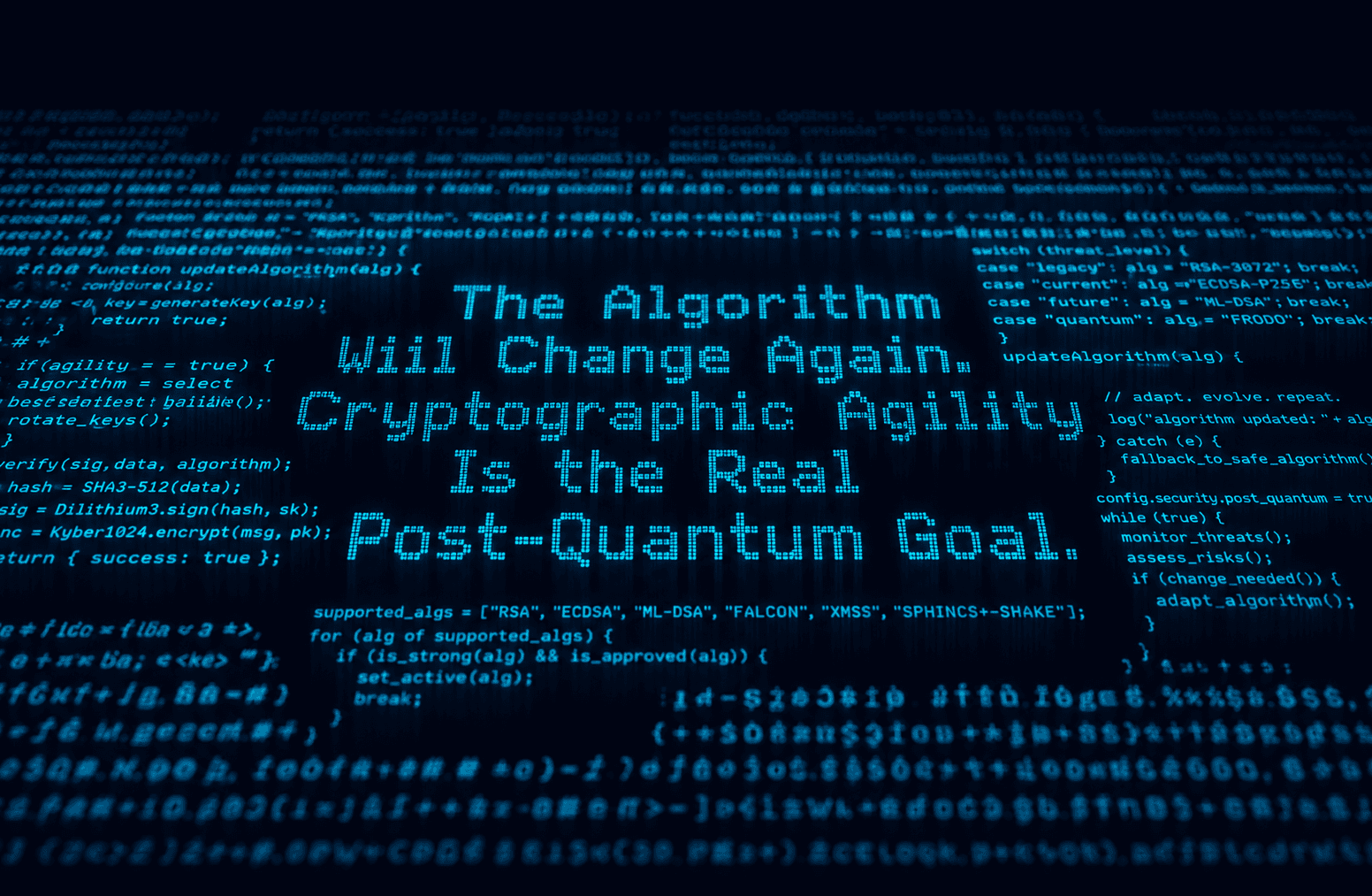
A cryptographic change that breaks interoperability can create serious operational consequences. That makes crypto-agility particularly important. An agile architecture allows organizations to change cryptographic algorithms, credentials and policies without rebuilding the underlying platform every time security requirements evolve.
The principle has immediate value when vulnerabilities emerge. It also matters for post-quantum migration. Aviation systems deployed today may remain operational during the period when organizations are transitioning away from public-key cryptography expected to become vulnerable to sufficiently capable quantum computers. Designing systems with the ability to change their cryptography therefore provides value regardless of exactly when that transition becomes necessary.
This is why post-quantum readiness should be understood as an architectural capability rather than a future software patch.
The Quantum Connection Is About Lifecycles, Not the Current FAA Report
The vulnerabilities identified by GAO are not quantum attacks, and quantum computing is not responsible for the authentication and encryption limitations described in the report.
The relevance to quantum security comes from the modernization problem aviation illustrates.
NIST has finalized post-quantum cryptographic standards and encourages organizations to begin transition planning. The challenge for industries such as aviation is that cryptography exists inside systems whose operational lifetimes are much longer than typical enterprise software.
Organizations therefore need to understand where current algorithms are embedded before migration becomes urgent.
Which communication protocols depend on public-key cryptography?
Which certificates authenticate infrastructure?
Which aircraft or ground systems cannot easily support new algorithms?
Which suppliers control the cryptographic implementations?
How can security be upgraded without reducing interoperability or aviation safety?
These are inventory, dependency and lifecycle questions before they become algorithm questions. The industries with the longest-lived assets may ultimately have the most difficult transitions.
Modernization Has to Preserve the Mission
Critical infrastructure operates under a constraint that ordinary enterprise IT does not always face.
The system cannot simply stop.
Air traffic controllers still need to communicate with aircraft while new technology is introduced. Airlines need global interoperability. Pilots cannot operate with communications standards that work in one jurisdiction but fail in another.
Security modernization therefore has to coexist with operational continuity.
GAO’s report highlights the challenge directly. Some aviation communication vulnerabilities cannot be resolved by FAA acting alone because industry stakeholders, manufacturers and other governments participate in the same systems.
That reality makes phased adoption important.
Organizations may need hybrid cryptographic environments in which old and new technologies operate simultaneously while migration occurs. They need visibility into which systems have moved and which remain dependent on legacy controls.
They also need auditability so security teams can prove which policies are active across complex environments.
Aviation therefore provides an unusually clear example of why cybersecurity architecture has to support transition rather than simply define an ideal end state.
Where QVH Fits
Quantum Vision Holdings does not manufacture aviation communications equipment and has no disclosed involvement with FAA systems. The relevance of QVH’s technology strategy lies in the modernization architecture that the aviation problem exposes.
QVH’s current platform is designed around security-focused hardware roots of trust, NIST-informed post-quantum technologies, cryptographic lifecycle and identity management and software-defined architecture intended to integrate with existing systems rather than requiring wholesale replacement.
Thymos is under development to assess environments for cryptographic vulnerabilities and areas where post-quantum transition planning may be required. That discovery capability addresses the first modernization problem: understanding where cryptography exists and which systems depend on it.
Enqrypta is available for prospective pilot integration and is being developed around cryptographic lifecycle management, policy enforcement, agility and audit visibility. The platform is designed to support phased adoption, hybrid cryptographic models and interoperability with current technologies, all of which are important considerations in operational environments that cannot simply be replaced at once.
At the hardware layer, the R1 Chip is designed as a device-level root of trust supporting isolated key storage, cryptographic identity and system integrity. PhotonFlux remains under development as hardware-grade entropy technology intended to support secure randomness and key generation.
None of these technologies should be interpreted as a proposed fix for the specific aviation communications systems identified by GAO.
The connection is architectural.
Aviation cybersecurity demonstrates what happens when critical infrastructure remains operational longer than the security assumptions under which it was originally designed. Replacing everything at once is impractical, but leaving identity and authentication weaknesses indefinitely is increasingly difficult to justify.
The challenge is therefore to create security infrastructure capable of evolving while the mission continues.
That problem extends far beyond aviation.
It is likely to define much of the post-quantum transition as well.
Sources
U.S. Government Accountability Office, “Aviation Cybersecurity: Enhanced Air Safety Requires FAA to Better Mitigate Threats to Aircraft Communications” (September 21, 2026) GAO
GAO Aviation Cybersecurity report
Reuters, “US Aircraft Communications With FAA ‘Incredibly Insecure,’ Senator Says” (September 21, 2026) Reuters
National Institute of Standards and Technology, “Post-Quantum Cryptography” NIST Post-Quantum Cryptography
Quantum Vision Holdings, “Technology” Quantum Vision Holdings
Quantum Vision Holdings, “Infrastructure for the Quantum Era” Quantum Vision Holdings
Forward Looking Statement
This article contains forward-looking information within the meaning of applicable Canadian securities laws, including statements regarding the development of post quantum security infrastructure, anticipated industry migration toward post quantum cryptography, and the potential impact of evolving computational capabilities on cybersecurity frameworks.
Forward-looking information reflects management’s current expectations, estimates, projections, and assumptions as of the date of publication and is subject to known and unknown risks and uncertainties that could cause actual results to differ materially from those expressed or implied. Such risks include, but are not limited to, technological development risks, regulatory developments, adoption timelines for post-quantum standards, competitive factors, supply chain considerations, capital requirements, and general economic conditions.
Readers are cautioned not to place undue reliance on forward-looking information. Quantum Vision Holdings undertakes no obligation to update or revise forward looking information except as required by applicable securities laws.






































" height="17.52951396648045px" id="xmOcoND1t" transform="translate(204.976 7.702)" width="15.023603351955217px"/><path d="M 8.487 17.871 C 6.878 17.871 5.44 17.495 4.174 16.711 C 2.874 15.961 1.848 14.903 1.129 13.574 C 0.376 12.243 0 10.777 0 9.106 C 0 7.537 0.24 6.173 0.719 5.013 C 1.197 3.888 1.848 2.933 2.669 2.183 C 3.491 1.466 4.414 0.921 5.406 0.546 C 6.399 0.171 7.425 0 8.487 0 C 9.889 0 11.258 0.307 12.559 0.955 C 13.859 1.603 14.921 2.626 15.775 3.956 C 16.597 5.286 17.007 7.025 17.007 9.106 C 17.007 10.777 16.631 12.243 15.913 13.574 C 15.159 14.903 14.133 15.961 12.867 16.711 C 11.567 17.495 10.095 17.871 8.487 17.871 Z M 2.805 8.935 C 2.805 10.197 3.045 11.323 3.524 12.312 C 3.97 13.335 4.654 14.153 5.509 14.733 C 6.365 15.313 7.357 15.62 8.487 15.62 C 9.65 15.62 10.676 15.313 11.532 14.733 C 12.387 14.153 13.037 13.335 13.516 12.312 C 13.962 11.323 14.202 10.197 14.202 8.935 C 14.202 7.332 13.928 6.071 13.38 5.082 C 12.799 4.093 12.08 3.376 11.224 2.933 C 10.369 2.49 9.445 2.251 8.487 2.251 C 7.562 2.251 6.638 2.49 5.783 2.933 C 4.927 3.376 4.21 4.093 3.661 5.082 C 3.079 6.071 2.805 7.332 2.805 8.935 Z" fill="rgb(245, 247, 255)" height="17.870575418994417px" id="kv4dTW59F" transform="translate(185.797 7.702)" width="17.006983240223462px"/><path d="M 0 0 L 3.217 0 L 3.217 3.649 L 0 3.649 Z M 0.24 24.555 L 0.24 7.367 L 2.977 7.367 L 2.977 24.555 Z" fill="rgb(245, 247, 255)" height="24.555023404041485px" id="w0qHDOCmY" transform="translate(180.402 0.677)" width="3.2170391061451937px"/><path d="M 7.7 17.871 C 5.271 17.871 3.389 17.325 2.054 16.2 C 0.685 15.108 0 13.744 0 12.073 L 2.738 12.073 C 2.738 13.062 3.183 13.88 4.107 14.562 C 4.996 15.279 6.194 15.62 7.7 15.62 C 8.419 15.62 9.103 15.517 9.754 15.313 C 10.404 15.108 10.951 14.801 11.396 14.358 C 11.807 13.915 12.012 13.403 12.012 12.755 C 12.012 11.834 11.567 11.152 10.711 10.777 C 9.855 10.402 8.762 10.129 7.46 9.924 C 6.674 9.788 5.852 9.651 5.031 9.481 C 4.176 9.345 3.423 9.106 2.738 8.799 C 2.02 8.492 1.472 8.049 1.062 7.469 C 0.616 6.923 0.412 6.173 0.412 5.218 C 0.412 4.195 0.685 3.274 1.266 2.49 C 1.848 1.705 2.635 1.091 3.627 0.648 C 4.62 0.205 5.784 0 7.084 0 C 8.487 0 9.685 0.171 10.608 0.546 C 11.533 0.921 12.286 1.364 12.833 1.944 C 13.381 2.524 13.791 3.103 14.031 3.751 C 14.271 4.399 14.374 5.013 14.408 5.593 L 11.67 5.593 C 11.67 3.206 10.164 2.012 7.118 2.012 C 6.161 2.012 5.408 2.183 4.826 2.524 C 4.243 2.899 3.867 3.308 3.627 3.786 C 3.389 4.263 3.251 4.706 3.251 5.116 C 3.251 5.73 3.457 6.207 3.867 6.548 C 4.279 6.889 4.826 7.162 5.545 7.332 C 6.264 7.537 7.016 7.708 7.872 7.844 C 8.692 7.946 9.514 8.083 10.335 8.219 C 11.123 8.39 11.876 8.594 12.559 8.901 C 13.245 9.208 13.791 9.686 14.202 10.265 C 14.613 10.845 14.818 11.664 14.818 12.653 C 14.818 13.778 14.477 14.733 13.791 15.517 C 13.072 16.302 12.183 16.916 11.123 17.291 C 10.028 17.666 8.898 17.871 7.7 17.871 Z" fill="rgb(245, 247, 255)" height="17.870575418994417px" id="UQzBp_aUG" transform="translate(163.76 7.702)" width="14.81773743016754px"/><path d="M 0 0 L 3.217 0 L 3.217 3.649 L 0 3.649 Z M 0.24 24.555 L 0.24 7.367 L 2.977 7.367 L 2.977 24.555 Z" fill="rgb(245, 247, 255)" height="24.555023404041485px" id="qNTxwQDQN" transform="translate(158.7 0.677)" width="3.2170391061451937px"/><path d="M 19.06 0 L 22.483 0 L 13.004 24.555 L 9.479 24.555 L 0 0 L 3.388 0 L 9.445 16.336 L 11.19 21.486 L 11.293 21.486 L 13.038 16.336 Z" fill="rgb(245, 247, 255)" height="24.55502346368715px" id="k1UuorS6G" transform="translate(135.082 0.677)" width="22.483324022346324px"/><path d="M 18.137 0 C 20.225 0 21.833 0.58 22.928 1.773 C 24.023 2.967 24.571 4.672 24.571 6.889 L 24.571 17.53 L 21.867 17.53 L 21.867 6.889 C 21.867 3.854 20.567 2.353 17.932 2.353 C 16.597 2.353 15.571 2.797 14.818 3.717 C 14.031 4.638 13.654 5.866 13.654 7.435 L 13.654 17.53 L 10.951 17.53 L 10.916 7.23 C 10.916 3.99 9.616 2.353 6.981 2.353 C 6.468 2.353 5.989 2.456 5.475 2.694 C 4.962 2.933 4.483 3.206 4.106 3.581 L 4.106 0.887 C 5.031 0.307 6.057 0 7.221 0 C 9.924 0 11.704 1.16 12.491 3.445 C 12.73 2.967 13.107 2.456 13.586 1.91 C 14.031 1.398 14.647 0.921 15.399 0.546 C 16.152 0.171 17.076 0 18.137 0 Z M 0 17.53 L 0 0.341 L 2.738 0.341 L 2.738 17.53 Z" fill="rgb(245, 247, 255)" height="17.529514747515744px" id="ZznO4PyGG" transform="translate(107.99 7.702)" width="24.570584933958457px"/><path d="M 10.917 13.676 L 10.917 16.404 C 9.719 17.154 8.35 17.53 6.81 17.53 C 4.688 17.53 3.011 16.882 1.814 15.62 C 0.616 14.358 0 12.584 0 10.3 L 0 0 L 2.738 0 L 2.738 9.924 C 2.738 11.561 3.148 12.857 3.97 13.778 C 4.757 14.699 5.886 15.176 7.323 15.176 C 7.974 15.176 8.59 15.04 9.24 14.767 C 9.89 14.494 10.437 14.119 10.917 13.676 Z M 12.285 17.188 L 12.285 0 L 15.023 0 L 15.023 17.188 Z" fill="rgb(245, 247, 255)" height="17.529544692737424px" id="wp4f7qXd8" transform="translate(90.455 8.043)" width="15.023142488575672px"/><path d="M 3.833 3.445 L 3.833 0 L 6.536 0 L 6.536 3.445 Z M 0 7.367 L 0 4.843 L 10.54 4.843 L 10.54 7.367 Z M 3.833 22.031 L 3.833 8.765 L 6.536 8.765 L 6.536 22.031 Z" fill="rgb(245, 247, 255)" height="22.03135621404381px" id="CG91nFOB0" transform="translate(77.9 3.2)" width="10.540027932960925px"/><path d="M 8.179 0 C 10.335 0 12.012 0.648 13.209 1.91 C 14.407 3.172 15.023 4.945 15.023 7.23 L 15.023 17.53 L 12.285 17.53 L 12.285 7.605 C 12.285 5.968 11.875 4.672 11.088 3.751 C 10.266 2.831 9.137 2.353 7.666 2.353 C 7.05 2.353 6.434 2.49 5.783 2.797 C 5.133 3.103 4.586 3.479 4.107 3.922 L 4.107 1.091 C 4.688 0.75 5.304 0.477 5.989 0.273 C 6.673 0.102 7.392 0 8.179 0 Z M 0 17.53 L 0 0.341 L 2.738 0.341 L 2.738 17.53 Z" fill="rgb(245, 247, 255)" height="17.529514747515744px" id="QIDHDNt4x" transform="translate(61.735 7.702)" width="15.022986177838789px"/><path d="M 16.631 15.245 C 16.768 15.245 16.905 15.245 17.042 15.21 C 17.179 15.176 17.247 15.176 17.282 15.176 L 17.282 17.734 C 17.111 17.768 16.939 17.802 16.768 17.836 C 16.563 17.871 16.358 17.871 16.187 17.871 C 15.057 17.871 14.133 17.564 13.346 16.95 C 12.559 16.37 12.148 15.381 12.148 13.983 L 12.148 6.173 C 12.148 4.945 11.738 3.99 10.951 3.342 C 10.129 2.694 9.069 2.387 7.768 2.387 C 6.502 2.387 5.475 2.762 4.654 3.479 C 3.833 4.195 3.422 5.15 3.422 6.275 L 0.684 6.275 C 0.684 5.218 0.958 4.229 1.506 3.274 C 2.019 2.319 2.806 1.535 3.867 0.921 C 4.928 0.307 6.228 0 7.768 0 C 10.095 0 11.875 0.546 13.072 1.671 C 14.27 2.797 14.886 4.468 14.886 6.684 L 14.886 13.471 C 14.886 14.017 15.023 14.46 15.297 14.767 C 15.571 15.074 16.015 15.245 16.597 15.245 Z M 10.78 13.88 L 10.78 16.336 C 10.129 16.779 9.445 17.12 8.658 17.427 C 7.871 17.734 7.015 17.871 6.16 17.871 C 4.962 17.871 3.935 17.666 3.011 17.223 C 2.088 16.813 1.335 16.234 0.821 15.483 C 0.274 14.733 0 13.88 0 12.96 C 0 11.971 0.205 11.152 0.616 10.504 C 1.027 9.856 1.574 9.344 2.259 8.969 C 2.909 8.594 3.662 8.287 4.517 8.049 C 5.373 7.844 6.194 7.673 7.05 7.503 L 10.78 6.821 L 10.78 9.038 L 7.118 9.754 C 6.365 9.924 5.646 10.095 4.996 10.299 C 4.346 10.504 3.799 10.811 3.422 11.186 C 3.011 11.561 2.806 12.107 2.806 12.823 C 2.806 14.494 3.935 15.347 6.194 15.347 C 7.152 15.347 8.042 15.176 8.829 14.869 C 9.616 14.562 10.266 14.256 10.78 13.88 Z" fill="rgb(245, 247, 255)" height="17.870575418994417px" id="vObUp1eeN" transform="translate(42.622 7.702)" width="17.281685667171075px"/><path d="M 10.916 13.676 L 10.916 16.404 C 9.719 17.154 8.35 17.53 6.81 17.53 C 4.688 17.53 3.011 16.882 1.814 15.62 C 0.616 14.358 0 12.584 0 10.3 L 0 0 L 2.738 0 L 2.738 9.924 C 2.738 11.561 3.148 12.857 3.97 13.778 C 4.757 14.699 5.886 15.176 7.323 15.176 C 7.973 15.176 8.59 15.04 9.24 14.767 C 9.89 14.494 10.437 14.119 10.916 13.676 Z M 12.285 17.188 L 12.285 0 L 15.023 0 L 15.023 17.188 Z" fill="rgb(245, 247, 255)" height="17.529544692737424px" id="DsKpQtQEd" transform="translate(25.597 8.043)" width="15.02298734867378px"/><path d="M 0 12.755 C 0 10.299 0.479 8.151 1.403 6.275 C 2.327 4.399 3.593 2.933 5.27 1.842 C 6.913 0.75 8.829 0.136 11.019 0 L 11.019 2.626 C 8.589 2.797 6.639 3.786 5.202 5.525 C 3.764 7.298 3.046 9.651 3.046 12.584 C 3.046 14.972 3.593 17.018 4.654 18.689 C 5.715 20.36 7.118 21.52 8.932 22.168 L 8.932 24.896 C 7.152 24.453 5.612 23.634 4.278 22.475 C 2.943 21.349 1.882 19.917 1.129 18.246 C 0.376 16.575 0 14.767 0 12.755 Z M 12.422 0 C 14.647 0.136 16.563 0.75 18.206 1.842 C 19.848 2.933 21.149 4.399 22.073 6.275 C 22.996 8.151 23.441 10.299 23.441 12.755 C 23.441 14.767 23.065 16.575 22.312 18.246 C 21.559 19.917 20.533 21.349 19.198 22.475 C 17.863 23.634 16.289 24.453 14.51 24.896 L 14.51 22.168 C 16.323 21.52 17.726 20.36 18.787 18.689 C 19.848 17.018 20.362 14.972 20.362 12.584 C 20.362 10.641 20.053 8.969 19.403 7.503 C 18.753 6.071 17.829 4.911 16.631 4.058 C 15.434 3.206 14.031 2.728 12.422 2.626 Z M 13.141 29.602 L 19.164 29.602 L 19.164 32.263 L 10.301 32.263 L 10.301 23.259 L 13.141 23.259 Z" fill="rgb(245, 247, 255)" height="32.26256986010672px" id="y1P5ukS9F" transform="translate(0 0.37)" width="23.44136946826275px"/></svg>)
" height="90.19391306911479px" id="RfbpsizFG" transform="translate(0 0.095)" width="220.00000552021564px"/></svg>)